Tag Archives: Secret Washington DC

Four Outdoor, Family-Friendly, Off-the-Beaten-Path Places to Explore Outside of DC

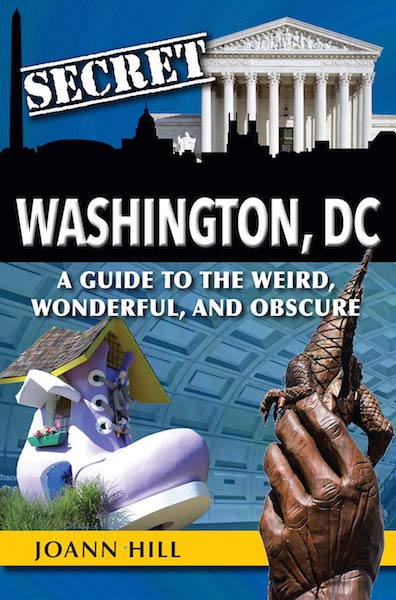
[Note: This guest post was written by JoAnn Hill, a DC area educator and author of the upcoming book “Secret Washington, DC: A Guide to the Weird, Wonderful, and Obscure.” You may be aware of some that have been featured on KFDC, but JoAnn provides more background and details to make a visit to see them even more interesting and fun!]


Spring is here, and Mother Nature is summoning us to get outside, explore, and relish in the abundant sunshine and crisp fresh air. While our nation’s capital is brimming with parks, gardens, and urban green oases, taking a day trip outside of the city can serve as a welcome change of pace and lovely opportunity to reset and recharge. A respite from the city is sometimes the exact remedy for chasing away those lingering winter blues and jumpstarting the highly anticipated new season.

Below are four outdoor, family-friendly, off-the-beaten-path places to explore outside of Washington, DC. A couple of them are free and can be explored further in local DC author JoAnn Hill’s upcoming book Secret Washington, DC: A Guide to the Weird, Wonderful, and Obscure. Check out Secret DC to discover dozens of additional outdoor and family-friendly spots in and around the Washington, DC, area.

Enchantment in a Storybook Forest

Many of our childhoods were defined by the stories and games that we played. Those looking to recapture their favorite childhood memories will be delighted to know that less than 45 minutes outside of Washington lies an enchanted forest, a storybook haven brimming with innocence, nostalgia, and magic.

In August 1955, the Enchanted Forest opened its storybook park in Ellicott City, MD. For over thirty years, families from near and far visited the popular fairy tale complex. Generations were captivated by the park’s ability to recreate a spellbinding world filled with delight and allure. As larger and more impressive entertainment complexes began to open throughout the area, the Enchantment Forest’s appeal began to wane, causing the park to close in the early 1990s.

More than a decade later, nearby Clark’s Elioak Farm made the decision to revive the storybook-themed park by gradually acquiring and reinstating a number of the forgotten fairy tale items. In 2004, much to the delight of parents and kids, they procured the Cinderella pumpkin coach. A year later, they restored a slew of other items, including Mother Goose and her Gosling, the Beanstalk affixed with the Giant at the top, multiple Gingerbread Men, the six Mice that pulled Cinderella’s Coach, and the Crooked House and the Crooked Man.

Over subsequent years, more items were obtained and refurbished, further enhancing the revived forest by adding over 20 new fairy tale characters and a newly created Enchanted Forest Pine Tree Maze.

Read All About It:  Read more about the Enchantment Forest at Clark’s Elioak Farm on pages 134-135 of Secret Washington, DC: A Guide to the Weird, Wonderful, and Obscure. You can also find it in the KFDC round-up of best outdoor places around the area and among the places to go for Easter fun.

Go and Explore: Clark’s Farm will reopen on Thursday, April 1. The farm and forest are open Tuesday through Sunday from 10am to 5pm. Admission is $7 per person.

Where: Clark’s Elioak Farm, 10500 Clarksville Pike, Ellicott City, MD


Gravelly Point Park

Aviation enthusiasts and those simply dreaming of escaping to faraway destinations should look no further than Gravelly Point Park, a small grassy park located a mere hundred feet north of Ronald Reagan Washington National Airport. It’s here in this delightful park in which both aircraft lovers and travel addicts can convene to witness commercial planes soaring overhead throughout the course of the day.

Situated along the George Washington Parkway in northern Virginia, the attractive picnic spot is where arriving planes descend to their landing strips. Flights arriving at the capital city travel over the Potomac River to reduce noise disturbances to the city. The park’s proximity to the north end of Reagan’s runway 1/19 makes it one of the premier spots in the United States for airplane sightings. Spectators willing to brave the thunderous noise are rewarded with unobstructed views of aircraft departing and arriving at the airport.

While flight tracking is the primary draw here, Gravelly Point Park attracts more than just aviation fanatics. It’s also a wonderful place to enjoy a picnic lunch, throw a frisbee or football, walk your dog, or ride a bike while surrounded by arresting scenic views. Regardless of your reason to visit, you’re guaranteed to be flying high in this picturesque park.

Read All About It:  Learn more about Gravelly Point Park as you soar through pages 50-51 of Secret Washington, DC: A Guide to the Weird, Wonderful, and Obscure. You can also find it in the KFDC round-up of best outdoor places.

Go and Explore: Entrance and parking are free to the public. By car, Gravelly Point is only accessible heading north on the GW Parkway. Runners and cyclists can access the park by taking the scenic Mount Vernon Trail.

Where:  George Washington Parkway, Arlington, VA
 

The Abandoned Shipwrecks of Mallows Bay

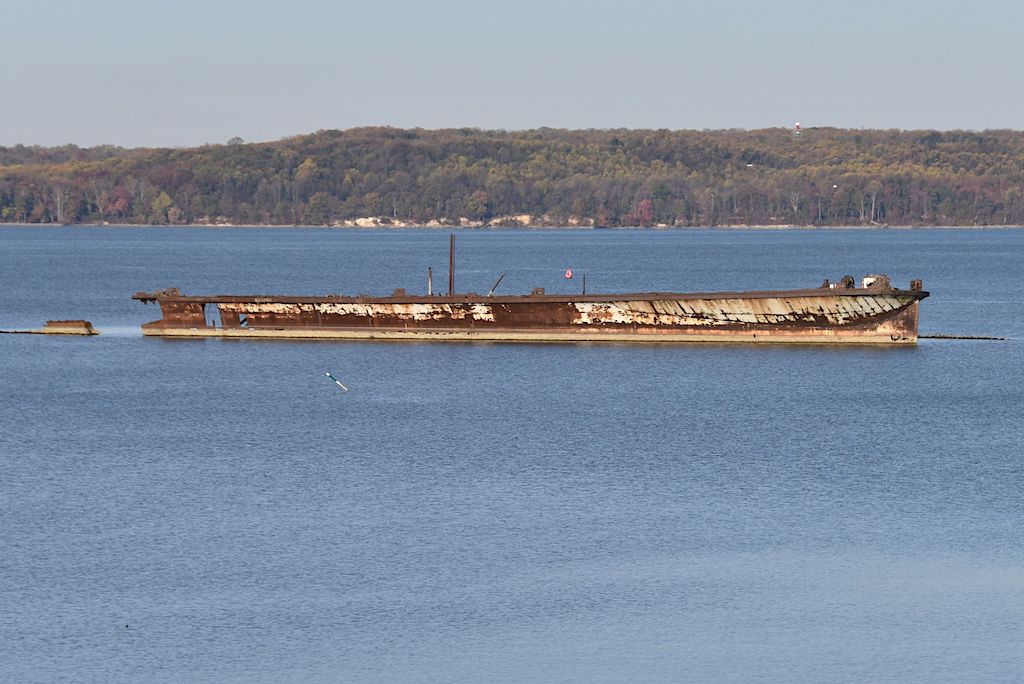
Near the shores of Mallows Bay, a small bay on the Maryland side of the river, lies what’s known to be the largest shipwreck armada in the Western Hemisphere. Over the last century, the bay’s turbid waters have become home to nearly 230 fallen ships, creating an enormous fleet graveyard.

When the United States entered World War I in 1917, 1,000 wooden steamships were commissioned for construction to help boost the number of transport vessels needed. Due to time constraints, the wooden ships were hastily and shoddily built, falling far below the standard of being ready to be used in wartime. In fact, not one of these poorly crafted vessels ever even crossed the ocean. The following year Germany surrendered, and the availability of steel increased, causing the ill-conceived wooden ships to become abandoned and obsolete. The decaying remnants of the nearly forgotten ships continue to occupy the muddy waters of Mallows Bay to this day.

In the 1960s, researchers began to evaluate the environmental effects of the shipwrecks on the river and its inhabitants. It was determined that the wooden shipwrecks were non-toxic and had in fact become a foundation for a flourishing ecosystem. The ghostly ships have managed to bring new life to the river, completing the circle of life!

Read All About It:  Plunge into Mallows Bay and learn more about its abandoned shipwreck fleet on pages 60-61 of Secret Washington, DC: A Guide to the Weird, Wonderful, and Obscure.

Go and Explore: Kayakers and canoeists who paddle up and through the wreckage will ultimately get the best views of the neglected ships. Charles County Recreation & Parks will soon be offering guided kayak tours of Mallows Bay. Visit their website to learn when 2021 tour dates will be added.

Where:  Wilson Landing Road, Nanjemoy, MD


The Awakening at National Harbor

Over the past several years, National Harbor has burgeoned as an expansive multi-use waterfront development. Conveniently located across the Potomac River from the District and Alexandria, VA, the lively complex is an ideal place to escape the city and enjoy a relaxing day. One particular attraction here, particularly for kids, is “The Awakening” sculpture, a gigantic statue emerging from a man-made beach along National Harbor’s waterfront. The statue is practically begging to be touched and climbed upon by gaggles of giggling children.

Constructed from five cast-aluminum pieces and measuring more than 70 feet across and 15 feet high, “The Awakening” was created in 1980 to portray a bearded man trapped on Earth who has been aroused. Artist J. Seward Johnson’s colossal creation is comprised of a man’s head, hand, outstretched arm, bent knee and foot that’s been arranged to suggest that he’s breaking free from Earth. The aluminum sculpture was previously buried at the public parkland at Hains Point in Washington, DC and was owned by the Sculpture Foundation, an organization that promotes public art. The foundation sold the colossal sculpture for a whopping $740,000 and subsequently dug it up from its previous residence and transported it by trucks to its current waterfront home.

While no real restoration was needed when “The Awakening” arrived at National Harbor, a small change to the art installation was needed. When the sculpture resided at Hains Point, the five pieces were slightly askew, causing the figure to be anatomically incorrect. When the statue’s wire base was reburied in the man-made beach, one of its legs was marginally moved. “The Awakening” instantly became a popular attraction of National Harbor and continues to be a major draw today.

Read All About It: See more about visiting The Awakening and National Harbor in this KFDC post.

Go and Explore: National Harbor is accessible from the Woodrow Wilson Bridge, I-495, I-95, and I-295, as well as by water taxi from Washington, DC, and Alexandria, VA.

Where: National Harbor: 153 National Plaza, Oxon Hill, MD


*  *  *  *  *


JoAnn Hill has lived in Washington, DC, with her husband Thalamus and dog Jackson for over 19 years. An avid traveler and foodie, JoAnn writes about their DC living and dining experiences, as well as their global travel adventures, on her blog dcglobejotters.org. Her writing has been published in BELLA Magazine, Escape Artist, and Triptipedia. JoAnn served as a DC Public Schools teacher for 17 years before co-founding Capitol Teachers, a tutoring company servicing the greater DC area. This is her first book.
 

Leave a Comment

Filed under All ages, Maryland, Ongoing, Outdoor, Virginia

Five Outdoor, Family-Friendly, and Free Off-the-Beaten-Path Places to Explore in DC

[Note: This guest post was written by JoAnn Hill, a DC area educator and author of the upcoming book “Secret Washington, DC: A Guide to the Weird, Wonderful, and Obscure.”  Here, she gives us a preview of what’s on those pages — some that I didn’t even know about and can’t wait to discover!]


The past year has undoubtedly presented unprecedented challenges and unforeseen changes for all of us. Concerns over the long-term impact on our mental health continue to grow. In a new study published in Nature Neuroscience, researchers found that experiencing new things on a daily basis led to more positive emotions every day. While international and far-away destinations may currently be out of reach for many, we Washingtonians must remember that we are luckier than most to have a bevy of places to visit right in our own backyard.  Now that springtime is upon us, it’s time to shake off that cabin fever, get outside, and become a tourist in the city we proudly call home.

Below are five outdoor, family-friendly, off-the-beaten-path places to explore around our beloved nation’s capital. All featured sites are free and just begging to be explored. Check out local DC author JoAnn Hill’s book Secret Washington, DC: A Guide to the Weird, Wonderful, and Obscure to discover dozens of additional distance and family-friendly spots in and around the Washington, DC, area.


Big Chair

“Sitting Pretty: The Best Seat in the Neighborhood”

Washington, DC, is a metropolis often defined by its enormity: huge government, monumental memorials, and immense power. It turns out a gigantic chair can also be added to DC’s long list of historical, recognizable, and sizeable landmarks.

Looming over the intersection of Martin Luther King Avenue and V Street in the southeast neighborhood of Anacostia, the colossal chair is hard to miss, and it has become an area icon. Coming in at an impressive 19.5 feet tall and a hefty 4,600 pounds, in 1959, the Big Chair it was identified as the largest chair in the world. The furniture company that created the chair, however, had its eyes on an even bigger prize.

They thought the chair would be even more compelling if they hired an individual live on top of the chair inside a glass cube. A glass home was constructed, complete with curtains along with a bed, shower, toilet, and television. The cube also had three transparent sides, allowing passersby to see its occupant. Rebecca Kirby, a 19-year-old model, was hired to live inside the cube. Kirby managed to stay there for an impressive 42 days, before it became too taxing, and she decided to come back down.

Today, a replica of the famed chair prominently towers over the same intersection, having replaced the deteriorating original back in 2005.

Read All About It:  Dive deeper into this peculiar story on pages 172-173 of Secret Washington, DC: A Guide to the Weird, Wonderful, and Obscure.

Go and Explore: Consider pairing your visit to the Big Chair with lunch on the Busboys and Poets’ outdoor patio, a mere two-minute walk away.

Where: 1001–1199 V St. SE, Washington, DC: A 10-minute walk from the Anacostia Metro Station.


Boundary Stones

“Set in Stone”

Geocachers, history buffs, and adventurists rejoice! Thanks to George Washington and a thorough team of surveyors, individuals can spend their weekends enjoying the imminent warm weather by exploring nearly 40 stone markers that helped set the boundary lines of our nation’s capital city.

In 1790, Washington selected the 100-square-mile site on the Potomac River between the busy ports of Alexandria, Virginia, and Williamsport, Maryland to serve as the nation’s new capital city. Shortly thereafter, planning for an approximate survey of the ten- mile square began, and astronomer and surveyor Benjamin Banneker and his team began to mark the diamond-shaped boundary of DC. They started at its most southern tip and established the south of the square at Jones Point in Alexandria. A ceremonial stone from 1794 still sits here along the Potomac River, commemorating the starting point of the District’s boundary line.  Forty stones were put in place featuring the engraving “Jurisdiction of the United States” on one side and “Maryland” or “Virginia” on the other, as well as the year of its placement and distance from the initial stone.

Throughout the years, many of the stones have either been removed, lost, or buried. Over time, the outline of DC has changed significantly, leaving the stones in unusual locations and in various conditions. Some can be found along sidewalks and in front yards, while others are located in dense forests. Some locations have plaques either attached to the stones or in place of those missing.

Read all about it: Discover more about the history of these historical stones on pages 140-141 of Secret Washington, DC:  A Guide to the Weird, Wonderful, and Obscure.

Go and Explore: boundarystones.org has mapped out each boundary stone’s location and displays pictures of each stone, showing them enclosed in iron, concealed behind grates, or visibly set out on display. Which boundary stones will you and your family begin exploring first?

Where: Various locations are spread out along the perimeter of Washington’s diamond-shaped border.


Chuck Brown Memorial Park

“Art Imitates Life and Go-Go Plays On”

After being considered the unofficial music of Washington, DC, for nearly 50 years, Go-Go was finally declared the official sound of the nation’s capital in February 2020. No artist has had a greater impact on Go-Go than born-and-bred Washingtonian Chuck Brown. The legendary godfather of Go-Go is credited with creating the genre and helping embed it into the cultural fabric of Washington, DC.

The Go-Go pioneer is so beloved that on August 22, 2014, which would have been his 78th birthday, the city dedicated a section of Langdon Park to the artist, naming it Chuck Brown Memorial Park. A 16-foot-tall abstract art sculpture, named “Wind Me Up, Chuck” by local sculptor and creator Jackie Braitman, was installed near the park’s entrance. The unique art structure stands near the park’s playground and includes colorful instruments for children complete with interactive pulsing lights aligned to funky beats and percussive instruments just begging to be played. Displayed near the art installation is a mosaic retaining wall chronicling 10 moments and images from Brown’s vibrant life.

Looking for even more displays of the city’s love and admiration for the Go-Go icon?  Several murals throughout the district vibrantly feature the revered star and the street at the 1900 block of 7th Street NW where it crosses with Florida Avenue NW has been named Chuck Brown Way.

Read all about it: Discover more about the history of these historical stones on pages 120-121 of Secret Washington, DC: A Guide to the Weird, Wonderful, and Obscure.

Go and Explore: The park is great to visit anytime. For an even more lively and memorable outing, join the fellow fans and residents every August 22nd to honor the late musician for Chuck Brown Day.

Where: Chuck Brown Memorial Park, 2901 20th St. NE, Washington, DC: Closest metro station is Rhode Island Avenue-Brentwood Station (about a 25-minute walk).


DC Callbox Art Project

“A Wake-Call: A Tribute to Women”

For centuries, history books, monuments, and memorials have overwhelmingly cast a spotlight on male figures. Out of some 160 monuments and memorials in the capital region, just over 50 statues include women. A local artist and an ambitious project answered the call to change that.

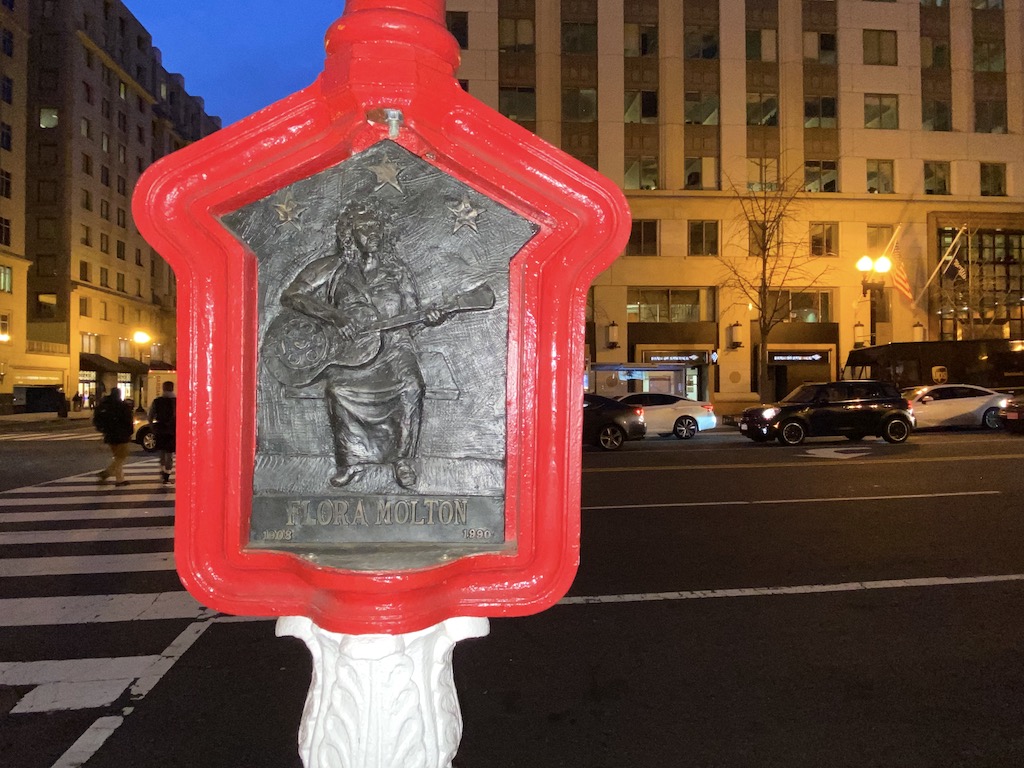
The DowntownDC BID and the DC Commission on Arts and Humanities partnered with artist Charles Bergen to reimagine nine nonfunctioning call boxes as public art installations. Throughout the 19th century, cast-iron call boxes served as an early emergency alert system predating telephones and two-way radio systems. These call boxes are still scattered across the city, but they haven’t been in operation since the 1970s. Bergen worked with urban historian Mara Cherkasky to identify nine prominent women throughout history for the project. The esteemed group of female trailblazers includes Gospel street musician Flora Molton and expressionist painter Alma Thomas. Each callbox includes a sculpture inside, usually with a painted metal symbol that represents the woman’s contribution (a guitar for Molton, for example), and dates of birth and death.

Read All About It: Learn more about how these extraordinary women made history on pages 178-179 of Secret Washington, DC: A Guide to the Weird, Wonderful, and Obscure.

Go and Explore: Grab your walking shoes and head downtown to explore these intricately designed call boxes while paying homage to nine noteworthy women.

Where: Many of these callboxes can be found between 13th and 15th streets NW, between G and L streets and are a short walk from Metro Center Station.


Mini Washington Monument Replica

“Seeing Double: A Hidden Mini Replica”

Perhaps no other monument in Washington, DC, encapsulates the nation’s capital’s history and patriotism more than the Washington Monument. As a national symbol honoring the country’s first president, the Monument has been a long- standing favorite landmark among both DC residents and tourists. Fans of the Monument will be thrilled to learn that there is not only one Washington Monument to marvel at, but actually two! Visitors can double their fun by uncovering a hidden 12-foot replica of the monument, buried underneath a nearby manhole cover.

Officially known as Bench Mark A, the underground duplicate actually serves as a Geodetic Control Point that’s primarily used by surveyors. It’s part of the system of a million control points across the nation that assists the National Geodetic Survey (NGS) synchronize all of the government’s maps. When it was selected, the underground monument copy was somewhat of an unusual choice. Typically, items like metal cups or rods that are planted into the ground are used, not mini monuments.

The smaller-scaled replica used to be above ground before being enclosed in a brick chimney and buried. In February 2019, the National Park Service unveiled the mini monument to the public for the first time.. The replica’s visibility was short-lived; shortly after its reveal, it was concealed again underneath its manhole cover.

Read All About It: Learn more about how these extraordinary women made history on pages 38-39 of Secret Washington, DC.

Go and Explore: Want to see the mini-monument for yourself? Head down to the National Mall, find the nearest park ranger, and ask them to uncover it!

Where: Buried under a manhole cover just south of the Washington Monument, which is located at 2 15th St. NW, Washington, DC: Closest metro station is Smithsonian.

*  *  *  *  *


JoAnn Hill has lived in Washington, DC, with her husband Thalamus and dog Jackson for over 19 years. An avid traveler and foodie, JoAnn writes about their DC living and dining experiences, as well as their global travel adventures, on her blog dcglobejotters.org. Her writing has been published in BELLA Magazine, Escape Artist, and Triptipedia. JoAnn served as a DC Public Schools teacher for 17 years before co-founding Capitol Teachers, a tutoring company servicing the greater DC area. This is her first book.


1 Comment

Filed under 2021, All ages, Coronavirus, COVID-19, DC, Educational, Outdoor, Social Distancing